
Context
The client’s project was in the execution stage: engineering was at its end, construction was in full swing and the civil works were nearing completion. The cost to complete revealed a substantial cost overrun. The client requested a project review with a focus on cost and schedule.
Methodology
FELcilitate proposed a Cold Eye Review (CER). A CER is a structured, independent assessment of a project by outside experts who are detached from daily operations. Its goal is to evaluate the actual project status objectively and to identify risks, gaps and hidden biases with a fresh, unbiased set of eyes. The review followed a three-step approach.
Document review
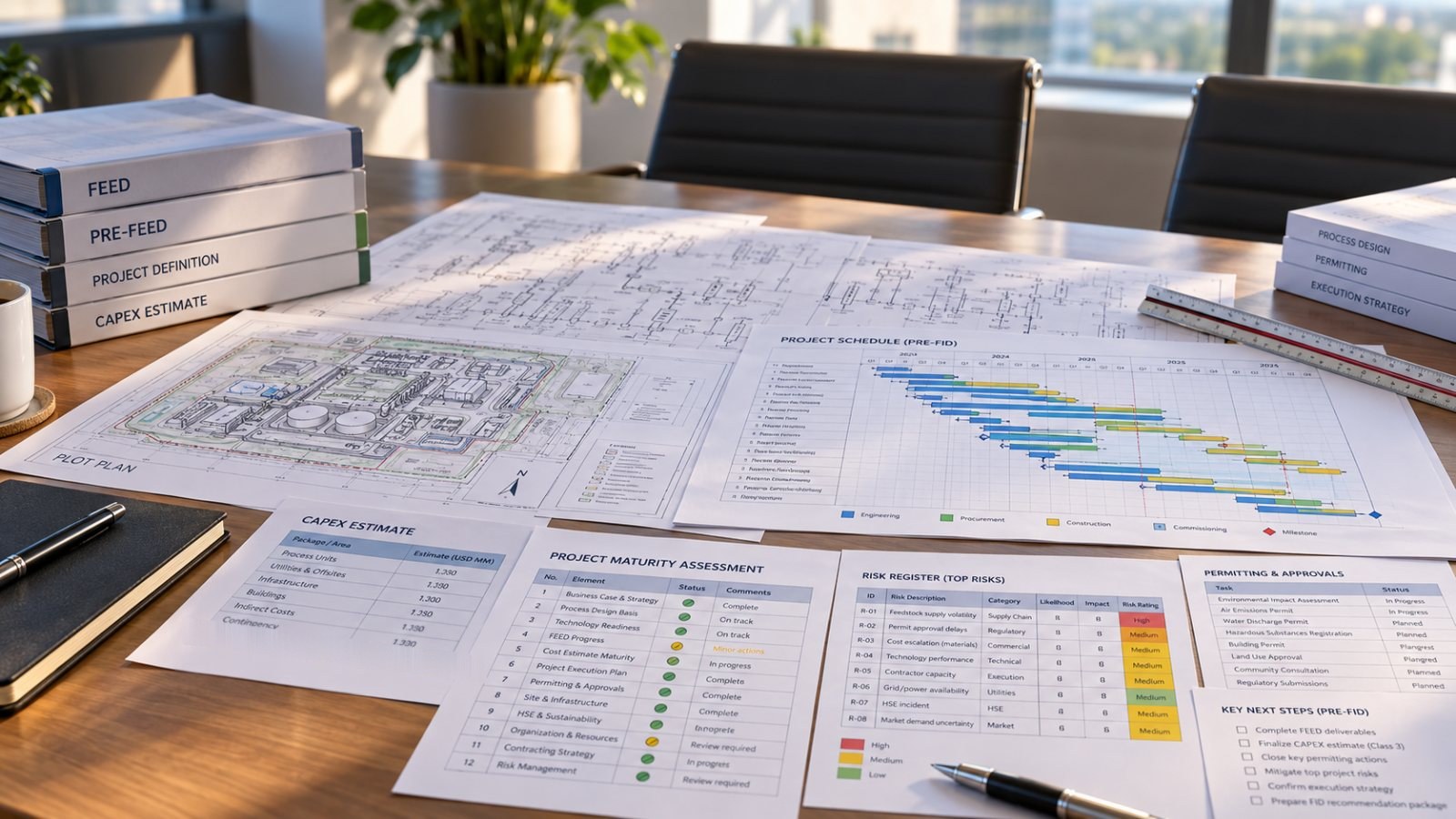
Analysis of the key documents: project organisation chart, progress reports, time schedule, cost summary sheets and technical documents such as P&IDs, plot plan and bills of quantities. On this basis a questionnaire was developed and coordinated with the project team in advance.
Site visit
A site visit with structured interviews to assess the project status on the ground.
Recommendations and report
A report compiling the findings from the document analysis, the site visit and the joint discussion.
Outcome
The report was based on:
- a fact-based, independent assessment of the project status with regard to scope, engineering maturity, schedule and cost;
- an evaluation of the engineering maturity against the Issue for Construction (IFC) status required for the construction phase;
- the identification and securing of the critical paths leading up to hot commissioning and first product;
- an assessment of the cost, forecast and variation-order situation, as well as the de-scoping potential;
- actionable recommendations on scope and engineering, schedule, cost, change and claim management, and organisation.
The critical finding was the time schedule: it did not adequately consolidate the site activities, so no critical path assessment was available and the project could not be steered under the given circumstances. The site visit revealed de-scoping potential that opened the way to further cost optimisation without jeopardising the project’s objectives. The cost assessment led to a new perspective on change and contract management and to a more differentiated view of contingency.